
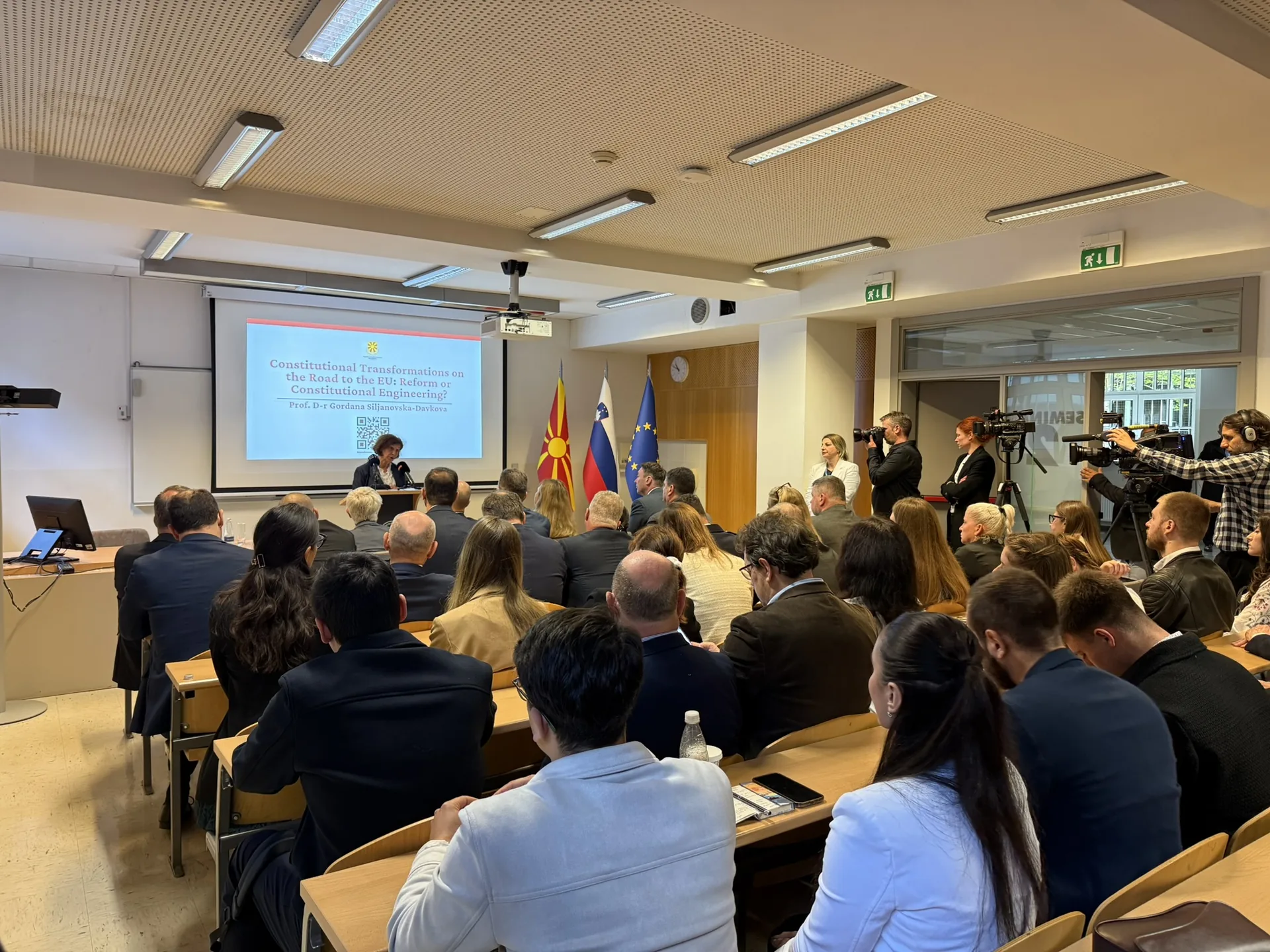
On the morning of 19 May, students from different academic backgrounds joined professors and representatives of the diplomatic community at the Faculty of Law in Ljubljana for a lecture by the President of the Republic of North Macedonia, Dr Gordana Siljanovska-Davkova.
Organised with
Faculty of Law, University of Ljubljana as official host and organiser, the Embassy of the Republic of North Macedonia in the Republic of Slovenia in institutional cooperation, and MSOS supporting student outreach, promotion, and participation in the follow-up student discussion.
A lecture room filled by more than one field of study
The lecture was organised by the Faculty of Law at the University of Ljubljana in cooperation with the Embassy of the Republic of North Macedonia in Slovenia. In the lead-up to the event, MSOS worked with the Embassy to share the invitation with students and encourage them to take part.
That outreach helped bring the event beyond the usual audience of one faculty. Students from different fields entered the lecture room alongside professors, ambassadors, and other guests, creating a setting in which an official presidential visit also became an opportunity for direct academic exchange.
Constitutional change, the EU path, and an academic return to Ljubljana
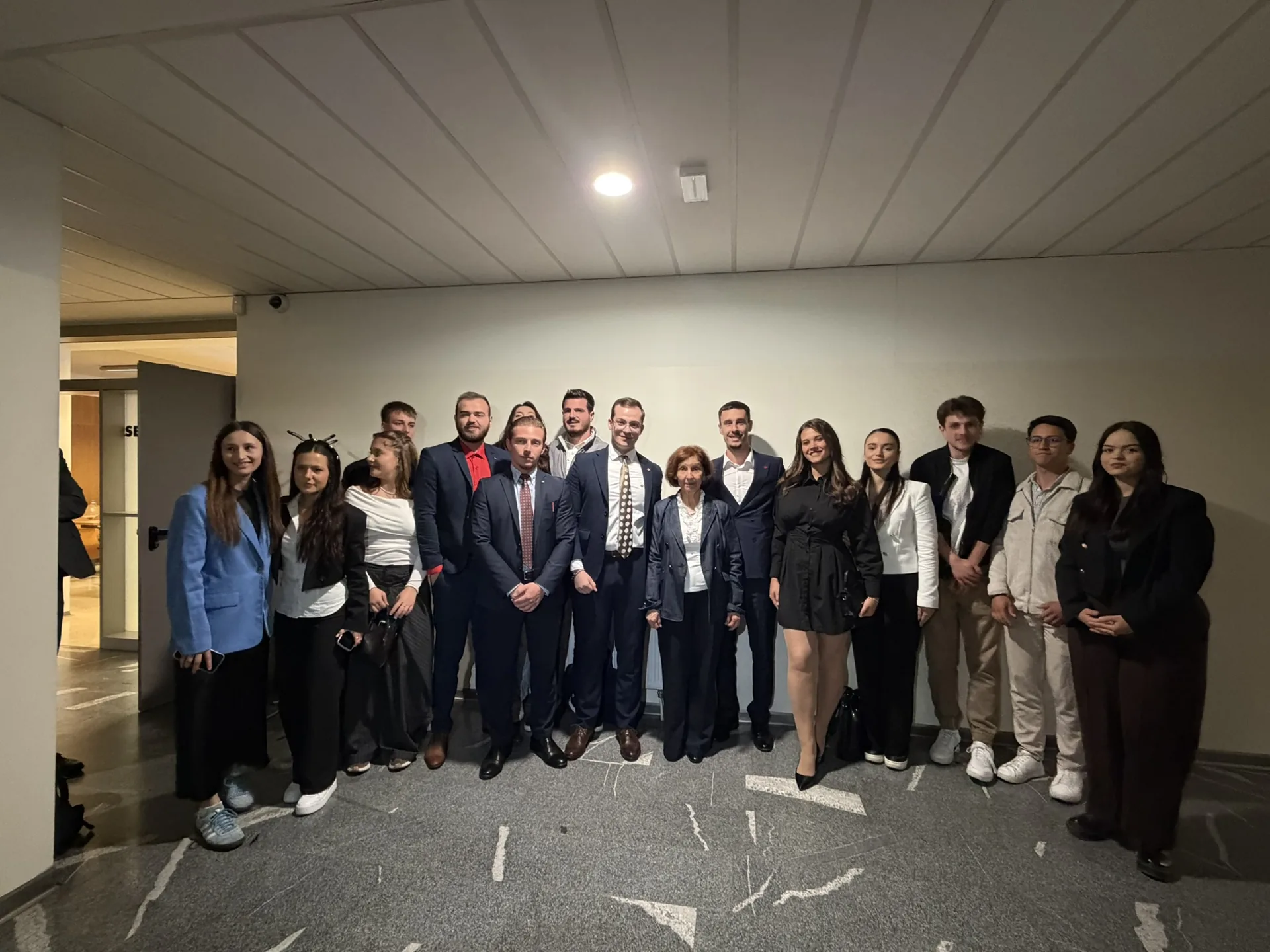
The lecture, titled "Constitutional Transformations on the Road to the EU: Reform of Constitutional Engineering?", focused on questions surrounding constitutional change and European integration.
President Siljanovska-Davkova discussed the constitution as the highest legal act and as a framework through which political systems, institutions, and relationships between citizens and the state are organised. The lecture also explored constitutional amendments as instruments of reform and the questions that arise when constitutional change becomes connected with a country's path toward European Union membership.
The setting also carried a personal academic connection. The President completed her doctorate at the Faculty of Law in Ljubljana, making the lecture a return to an institution that forms part of her own academic path.
Rather than treating the visit only as a formal appearance by a head of state, the lecture placed students and professors directly inside a discussion about constitutional law, institutional reform, and European integration.
Questions from the room
After the main lecture, the programme opened into a Q&A session.
Students and other participants were able to raise questions directly, extending the event beyond a one-way presentation. The English-language format also made the discussion accessible to an academically diverse audience and to representatives of the international and diplomatic community present in the room.
For MSOS, this was an important part of the event. Bringing students into the room mattered, but giving them an opportunity to listen, ask, and take part in a discussion with the President made the experience more meaningful than simply following an official visit from a distance.
Conversations beyond the lecture hall
The official programme did not end when the lecture room emptied.
A small reception with snacks in the hall outside gave students, professors, guests, and diplomatic representatives time to continue conversations in a more informal setting. The change in atmosphere created space for introductions, short exchanges, and discussions that are often difficult to have during the formal part of an event.
For students, moments like these are part of what makes institutional visits valuable. They turn a formal programme into an opportunity to meet people from different fields, speak directly with professors and guests, and connect academic discussion with the wider community around it.
A smaller meeting focused on students
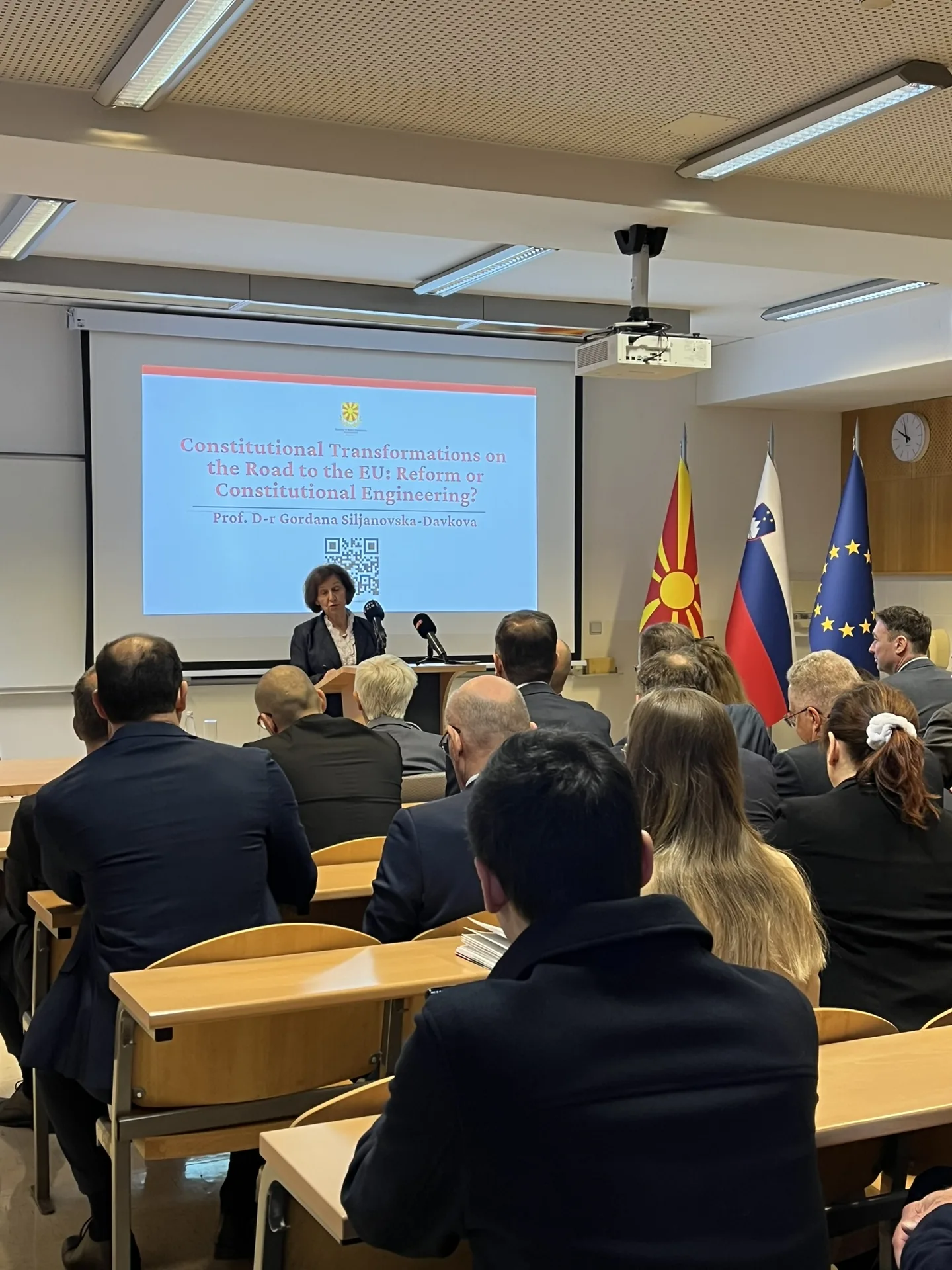
After the official programme, members of MSOS joined other students and professors for a smaller meeting with President Siljanovska-Davkova.
The conversation created an opportunity to discuss matters important to Macedonian students in Slovenia, the role of the student community, and possibilities for stronger cooperation in the future.
For MSOS, this was an especially valuable continuation of the day. The organisation's role was not only to help bring students to the lecture, but also to ensure that students had space to be part of the wider conversation surrounding the visit.
The meeting reflected an important part of MSOS's work: connecting students with institutions, creating access to conversations that concern them, and helping build stronger links between the Macedonian student community in Slovenia and institutions in both countries.
Part of a wider official visit to Slovenia
The lecture formed part of President Siljanovska-Davkova's official visit to Slovenia from 17 to 19 May 2026, undertaken at the invitation of Slovenian President Nataša Pirc Musar.
During the visit, the two presidents met in Ljubljana and discussed bilateral relations and North Macedonia's European integration. President Siljanovska-Davkova also met the President of the Slovenian National Assembly, Zoran Stevanović, representatives of the Macedonian community, Macedonian professionals working in science, culture, and medicine, and members of the Slovenian-Macedonian Business Club. The official programme also included a visit to Bohinj.
Within that broader state visit, the Faculty of Law lecture created a direct connection with students and the academic community. For MSOS, it was a chance to help make that part of the programme visible and accessible to students, and to bring the student perspective into the conversations taking place around the visit.